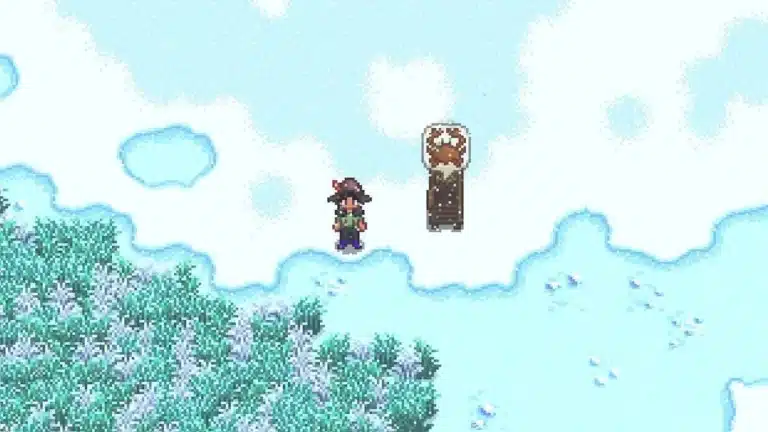
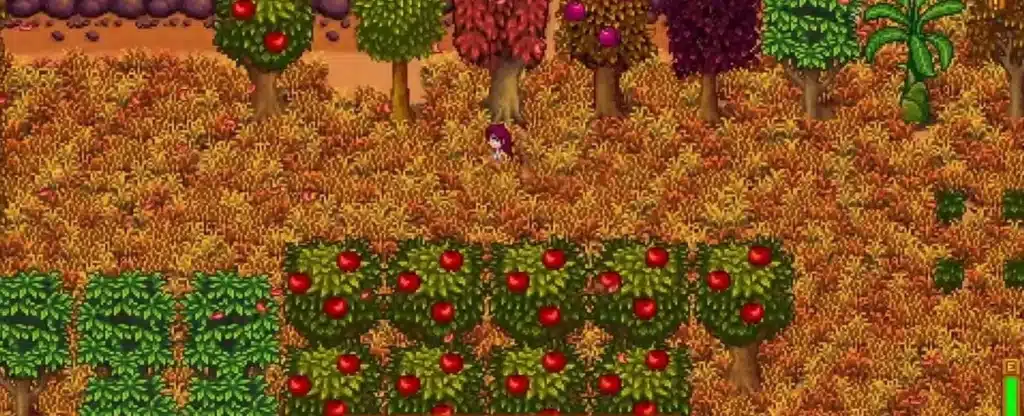
Fruit trees are the slowest money in Stardew Valley and also the laziest. You pay Pierre thousands of gold for a twig, wait 28 days, and then the twig pays you every single day of its season for the rest of the save.
The catch: most players plant them late, pick the wrong ones or sell the fruit raw. Let me break this down for you.
How Fruit Trees Work
A fruit tree is not a crop. These rules decide whether your 6,000g sapling becomes a pension or a lawn ornament.
- Growth time: every sapling takes 28 days to mature, in any season, winter included. It never needs water.
- Planting space: the eight tiles around the sapling must be empty to plant it, and they must stay clear while it grows. Objects, paths or other trees in that ring stop its growth.
- Harvest: a mature tree grows one fruit per day in its season and holds up to three, so you can skip a couple of days without losing anything.
- Winter: outdoor trees on the farm produce nothing in winter. In the Greenhouse or on Ginger Island they fruit every day of the year.
- Quality: fruit starts at normal quality and goes up one star level for each year after the tree matures, so it reaches iridium quality three years after maturity.
- Fertilizer: fruit trees cannot be fertilized. Tree Fertilizer is for wild trees like oak and maple.
Plot twist: since version 1.6, chopping down a mature fruit tree gives you its sapling back, and that sapling keeps the fruit quality the tree had reached. Moving an old tree no longer means starting from zero.
Every Fruit Tree, Price and Season
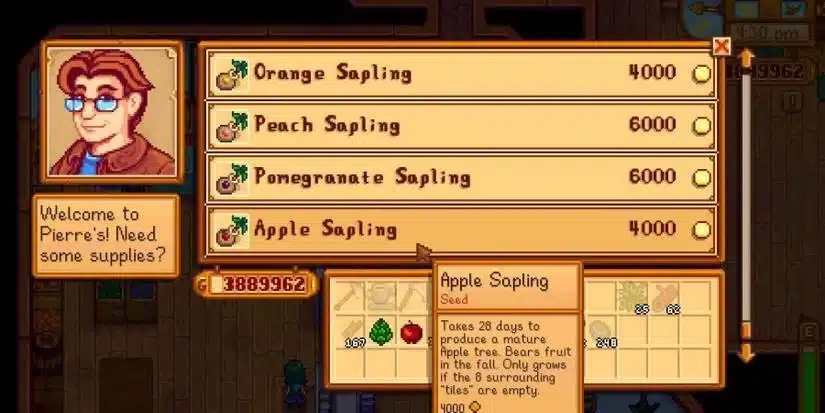
Pierre sells the six mainland saplings all year, and the Traveling Cart sometimes has them too. Banana and Mango saplings come from the Island Trader on Ginger Island.
| Tree | Season | Sapling price | Fruit base price | Where to buy |
|---|---|---|---|---|
| Apricot | Spring | 2,000g | 50g | Pierre’s |
| Cherry | Spring | 3,400g | 80g | Pierre’s |
| Orange | Summer | 4,000g | 100g | Pierre’s |
| Peach | Summer | 6,000g | 140g | Pierre’s |
| Apple | Fall | 4,000g | 100g | Pierre’s |
| Pomegranate | Fall | 6,000g | 140g | Pierre’s |
| Banana | Summer | 5 Dragon Teeth | 150g | Island Trader |
| Mango | Summer | 75 Mussels | 130g | Island Trader |
The Math: a Peach tree outdoors gives you up to 28 fruit a summer, about 3,920g raw. That is a little under two summers to earn back the sapling. In the Greenhouse the same tree fruits for 112 days a year, which is roughly 15,680g of raw fruit per year. Same twig, four times the output.
How to Plant Fruit Trees Without Wasting a Season
The classic mistake is buying a sapling in the season you want fruit. By the time it matures, the season is over.
- Count back 28 days: plant spring trees during winter, summer trees during spring, and fall trees during summer. Planting on day 1 of the season before means the tree is ready on day 1 of its season.
- Clear a 3×3 patch: the sapling sits in the middle, and the eight tiles around it stay empty until it matures. No grass, fences, sprinklers or paths in that ring.
- Harvest as you pass: three fruits can sit on the tree, so you can harvest every few days instead of daily.
- Build around it later: once the tree is mature, you can put paths, chests or machines next to it without hurting production.
Greenhouse and Ginger Island Orchards
This is where fruit trees stop being a hobby. The Greenhouse has a tiled border around the soil, and trees can be planted on those edge tiles. That keeps every tilled tile free for crops while your trees fruit all year.
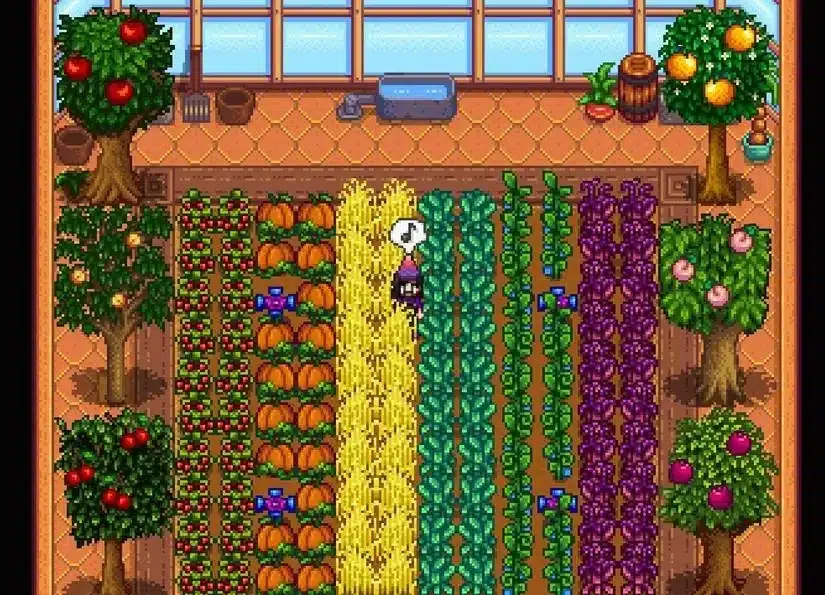
- Greenhouse edges: space the trees so each sapling has its empty ring while growing. One of each fruit is a good start, then add duplicates of the high earners.
- Ginger Island: the island farm has no winter, so any tree planted there fruits all year.
- Banana and Mango: both are summer trees. On the main farm they only fruit in summer, so most players put them in the Greenhouse or on the island.
Which Fruit Trees Are Worth Buying
- Best profit per tree: Peach and Pomegranate. They cost the most, but 140g fruit is the best you can buy at Pierre’s.
- Best early pick: Apple and Pomegranate for fall. You can plant them during summer, and fall fruit also fills a few Community Center bundles.
- Best budget tree: Apricot at 2,000g. Cheap to buy, but 50g fruit takes a long time to pay back.
- Best endgame tree: Banana, as long as you have Dragon Teeth from the Volcano. It sells for slightly more than Peach and fruits all year in the right spot.
Hot Take: a 50g Apricot and a 140g Peach take up the same space, and space is what you run out of first.
Processing: Never Sell Fruit Raw
Raw fruit is the worst way to cash in. Two machines change everything.
| Product | Formula | Peach value | Machine time |
|---|---|---|---|
| Raw fruit | Base price | 140g | None |
| Jelly | 2x base + 50g | 330g | About 2 to 3 days |
| Wine | 3x base | 420g | About 7 days |
Wine gives more per fruit, but a Keg takes about a week. A Preserves Jar turns out jelly in a couple of days, so one Jar handles far more fruit per season. Few machines? Use Jars. A shed full of Kegs? Wine wins. With the Artisan profession, both sell for 40% more.
If you want to see how many farmers are tending their orchards right now, our Stardew Valley player count page tracks it live.
Fruit Trees FAQ
How long do fruit trees take to grow in Stardew Valley?
Every fruit tree takes 28 days to mature, and it grows in any season, including winter. It does not need water, but the eight tiles around it must stay empty while it grows.
Can fruit trees be planted next to each other?
Not directly. Each sapling needs the eight tiles around it free while growing, so trees end up at least one empty tile apart. Once a tree is mature, you can place things right next to it.
Do fruit trees produce in winter?
Not outdoors on the main farm. In the Greenhouse and on Ginger Island, fruit trees produce every day of the year.
When do fruit trees give iridium quality fruit?
Quality goes up one level per year after the tree matures: silver after one year, gold after two and iridium after three.
What is the most profitable fruit tree?
Among Pierre’s saplings, Peach and Pomegranate (140g fruit). Banana fruit sells for a bit more at 150g, but the sapling costs 5 Dragon Teeth from the Island Trader.
Actually Do This: look at the calendar, find next season, and buy that season’s best sapling today. Plant it in a clear 3×3 patch and forget it for 28 days. When the Greenhouse opens, line its edges with Peach, Pomegranate and Banana, then feed the fruit into Jars or Kegs. Future you will be rich and insufferably smug about it.