
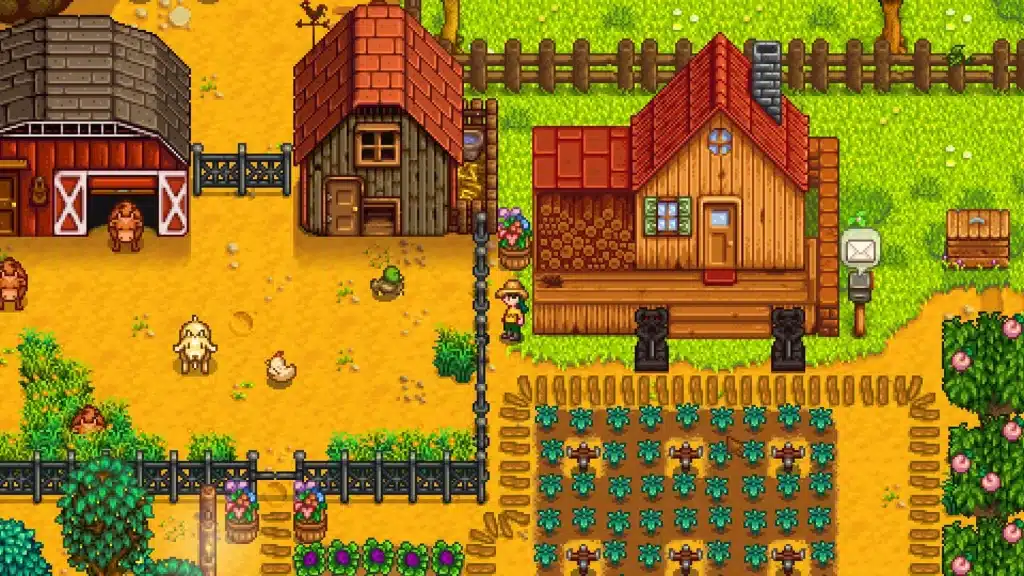
Your barn is packed, your coop is loud, and your gold total has not moved in a week. If your ranch is still six White Chickens and one confused cow… we need to talk.
Animals are the most relaxed income in Stardew Valley, but only when you buy them in the right order and back them with machines. Below are the real numbers for every major animal, the building order I use on every new save, and the mistakes that quietly drain your profit.
How Animal Profit Actually Works
The sell price of an egg is not your profit. A good ranch animal needs four things lined up: a fair purchase price, frequent output, high friendship, and a machine that turns the raw product into an artisan good.
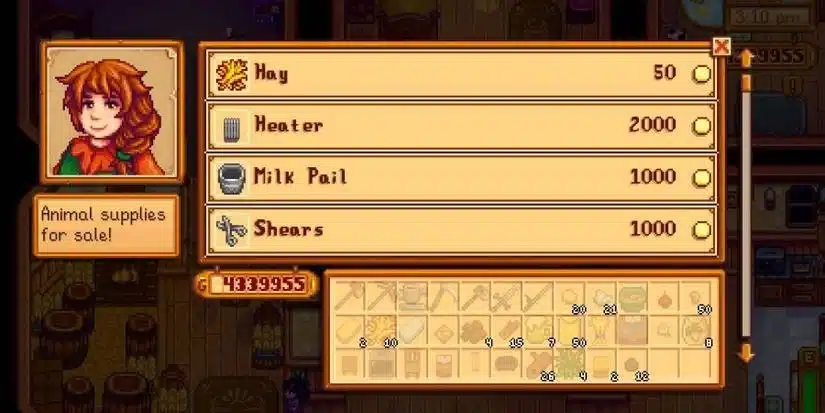
- Feed: Hay costs 50g a bale at Marnie’s Ranch. Each animal eats one per day indoors, so a full barn on bought Hay burns 600g a day. Grass outside costs nothing in spring, summer and fall.
- Machines: Eggs go into a Mayonnaise Machine, Milk into a Cheese Press, Wool into a Loom, Truffles into an Oil Maker. Raw goods are the slow lane.
- Friendship: Pet every animal every day. High friendship means better quality products and more Large Eggs and Large Milk.
- Weather: Pigs only dig up Truffles outdoors, so rain and the whole of winter shut them down.
Animal Profit Table
The Math: Mature, happy animals, regular quality products, one machine per animal, no Artisan profession, and every bale of Hay bought at 50g. Net per day is the processed value divided by how often the animal produces, minus the 50g of feed. Payback is purchase price divided by net per day, rounded up.
| Animal | Price | Building | Artisan Good | Net per Day | Payback |
|---|---|---|---|---|---|
| Chicken | 800g | Coop | Mayonnaise 190g, daily | 140g | 6 days |
| Cow | 1,500g | Barn | Cheese 230g, daily | 180g | 9 days |
| Duck | 1,200g | Big Coop | Duck Mayonnaise 375g, every 2 days | about 138g | 9 days |
| Goat | 4,000g | Big Barn | Goat Cheese 400g, every 2 days | 150g | 27 days |
| Pig | 16,000g | Deluxe Barn | Truffle Oil 1,065g, random | varies | varies |
Pigs get “varies” on purpose. Their Truffle count depends on season, rain, free outdoor tiles and a random roll each morning, so any fixed number would be fiction.
The Ranch Build Order
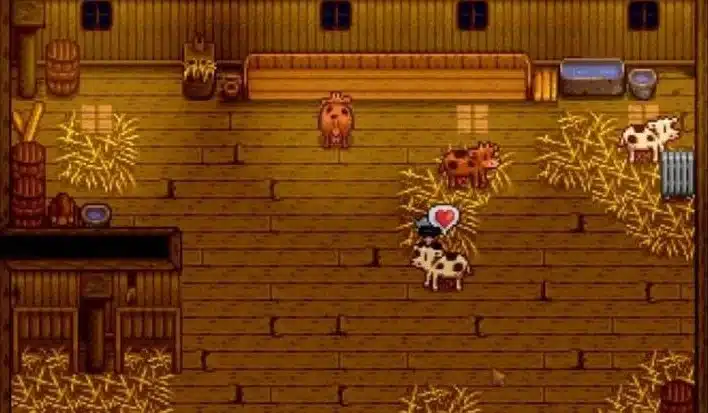
Buying order matters more than the animal you love most.
Step 1: Coop and Chickens
A Coop costs 4,000g, 300 Wood and 100 Stone. Chickens are 800g and lay every day, which makes them the cheapest income on the farm. Buy two or three, then craft a Mayonnaise Machine as soon as Farming level 2 unlocks it.
Step 2: Barn and Cows
A Barn costs 6,000g, 350 Wood and 150 Stone. Cows run 1,500g, and a Cheese Press turns 125g Milk into 230g Cheese. Cows are the best first barn animal by a mile.
Step 3: Big Coop and Ducks
The Big Coop costs 10,000g, 400 Wood and 150 Stone, adds an Incubator and unlocks Ducks. Duck Mayonnaise at 375g is a clean upgrade.
Step 4: Big Barn and Goats
The Big Barn costs 12,000g, 450 Wood and 200 Stone. Goats are 4,000g and give Goat Milk every two days. Large Goat Milk makes gold quality Goat Cheese worth 600g, so keep their friendship high.
Step 5: Deluxe Barn and Pigs
The Deluxe Barn costs 25,000g, 550 Wood and 300 Stone and unlocks Pigs and Sheep. Pigs have the highest ceiling on the farm, but at 16,000g each they are a spring of year 2 project for most saves.
Hot Take: Chickens are a great starter and a terrible retirement plan. Buy them first, then move your coop money into ducks and your barn money into cows and pigs. The Deluxe Coop is only worth it early if you want Rabbits for the Rabbit’s Foot.
What the Payoff Looks Like
The Math: A Deluxe Barn holds 12 animals. Twelve cows with twelve Cheese Presses net about 2,160g a day on bought Hay. Take Artisan at Farming level 10 and Cheese rises from 230g to 322g, so the same barn clears roughly 3,260g a day, or about 22,800g a week, for a building you mostly walk through.
Pigs are the lottery ticket. A Truffle sells for 625g raw and Truffle Oil for 1,065g, which becomes 1,491g with Artisan. On a good dry day a single pig can find more than one Truffle (yes, really), which is why a pig barn beats everything else from spring to fall.
- Chickens: Best first animal. Large Eggs make gold quality Mayonnaise worth 285g.
- Cows: Best early barn animal. Steady, cheap, and they keep producing indoors all winter.
- Ducks: Best coop upgrade. Higher value per item even at half the speed.
- Goats: Solid mid game pick once Large Milk starts rolling in.
- Pigs: Best late game animal for warm seasons, with Truffle Oil as the engine.
- Sheep and Rabbits: Utility picks. Wool feeds your Loom for Cloth, Rabbits add a Rabbit’s Foot chance.
Tips to Squeeze More Gold From Every Animal
- Plant Grass Starter: Animals graze outside on warm sunny days (door open), which cuts Hay use to zero. Fill your Silos in fall with the Scythe so winter costs you nothing.
- Buy Machines First: If animals produce more than your machines can handle, raw Milk and Eggs leave money on the table.
- Give Pigs Space: Truffles need open, untilled ground. A pen crammed with trees and sprinklers means fewer Truffles.
- Grab the Auto-Grabber: Marnie sells it for 25,000g. It collects products inside a building every morning and saves real time on big ranches.
Stardew still has a huge farming crowd years after launch: you can check the live player counts on our Stardew Valley Steam charts and player count page.
Best Animals FAQ
What is the most profitable animal in Stardew Valley?
Pigs. Truffle Oil sells for 1,065g (1,491g with Artisan) and a pig can find several Truffles a day in good weather. They do nothing in rain or winter, though.
What animal should I buy first?
Chickens. They cost 800g, lay every day and pay for themselves in about a week once you own a Mayonnaise Machine.
Are cows or goats better?
Cows for early profit, since they are cheaper and produce daily. Goats catch up later when Large Goat Milk turns into 600g Goat Cheese.
Do animals need Hay in winter?
Yes. Grass does not grow in winter, so every animal eats one Hay a day from your Silos. Cut grass with the Scythe in fall to stock up.
Is Artisan worth it for animal products?
Yes. Artisan adds 40 percent to the sell price of Cheese, Mayonnaise, Truffle Oil and Cloth, which is the biggest single boost a ranch can get.
Actually Do This: Count your animals, your machines and your Hay. If any of those three numbers is out of balance, fix it today, then save up for the next building on the ladder. The math doesn’t lie: the right animals in the right order beat a bigger ranch every time.